

What Is a Separately Managed Account?
Understanding the Purpose of an SMA
A separately managed account (SMA) is an investment portfolio of individual securities managed by a professional firm on behalf of a single investor. Unlike pooled investment vehicles, such as mutual funds, an SMA allows the investor to directly own each underlying security. This structure is designed to offer clarity, customization, and transparency within a comprehensive wealth management framework.
SMAs may appeal to individuals who seek a more personalized investment experience, including the ability to tailor their holdings or address specific planning considerations.

How an SMA Functions
An SMA provides a dedicated relationship between the investor and the portfolio manager. Because each security is owned directly, the investor maintains visibility into the entire portfolio. This structure may also allow for personalized tax-management techniques and the flexibility to incorporate unique constraints or preferences.
Common features include:
Direct Ownership: The investor holds individual stocks, bonds, or other securities.
Professional Oversight: A manager implements day-to-day decisions within the agreed strategy.
Transparency: Holdings are typically visible at all times.
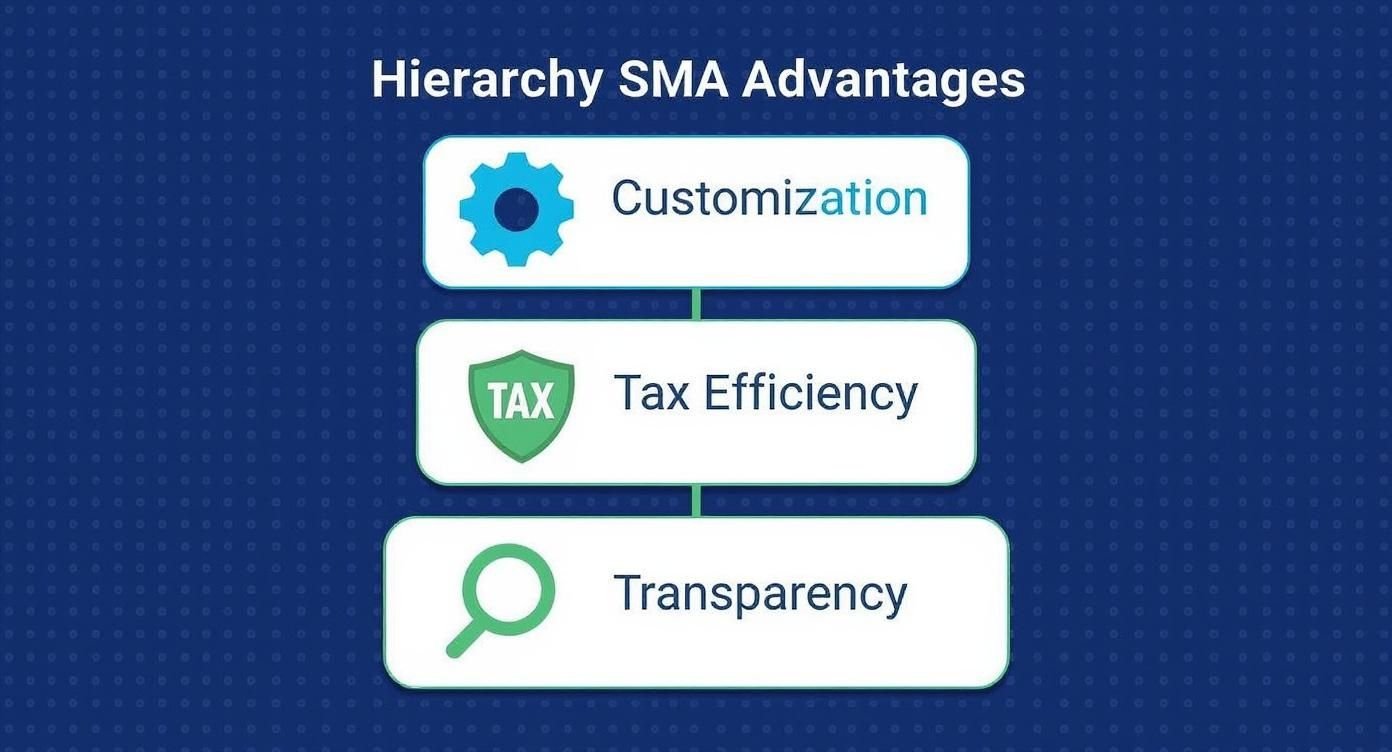
Customization: Portfolios may be structured to reflect values, concentrated positions, or specific financial circumstances.
Comparing SMAs and Mutual Funds
SMAs and mutual funds share professional management but differ in structure. Mutual fund investors own shares of a pooled vehicle, while SMA investors own the underlying securities directly. This distinction can influence tax treatment, customization options, and transparency levels.
Understanding these differences helps clarify when each vehicle may be appropriate within an overall financial strategy.
Customization and Tax Considerations
Customization is a distinguishing feature of SMAs. Because each security can be managed individually, an SMA may support:
Diversification around concentrated stock positions
Screening for personal or environmental values
Portfolio adjustments based on unique constraints or existing holdings
SMAs may also allow for tax-focused techniques such as tax-loss harvesting or strategic gain management. These tools are highly dependent on a client’s circumstances and require careful coordination with qualified tax professionals.
SMAs and Other Investment Vehicles
SMAs differ from pooled investment structures like ETFs or hedge funds. ETFs provide broad market exposure but limited personalization. Hedge funds may offer complex strategies but often include different liquidity and transparency characteristics. SMAs focus on individualized portfolio design within a regulated framework.
The appropriate choice among these vehicles depends on factors such as portfolio size, planning objectives, and tax considerations.
Determining Whether an SMA is Appropriate
SMAs may be better suited for investors with more complex financial needs or larger portfolios. Considerations may include:
Concentrated holdings that require targeted diversification
Sensitivity to tax implications
Interest in values-based investing
Desire for high levels of transparency and control
Evaluating an SMA within the context of broader wealth goals can help determine whether it aligns with an investor’s long-term strategy.
Conclusion
A separately managed account is a customizable investment structure built around direct ownership of individual securities. Its flexibility, transparency, and tax-management potential may make it useful for certain investors seeking a more personalized approach. Understanding how SMAs function and how they differ from other options can support thoughtful decision-making as part of an overall financial plan.
Investment advice offered through Stratos Wealth Partners, Ltd., a registered investment advisor. Stratos Wealth Partners, Ltd and Parkview Partners Capital Management are separate entities. Neither Stratos nor Parkview Partners Capital Management provides legal or tax advice. Please consult legal or tax professionals for specific information regarding your individual situation. Investing involves risk, including possible loss of principal. The information presented is for educational purposes only and should not be interpreted as individualized investment, tax, or legal advice. Past performance is not indicative of future results. For more information, please review our Form ADV, available upon request.



Comments