

A Guide to Retirement Income Distribution Planning
Updated: Sep 16, 2025
Planning for retirement isn’t just about accumulating savings — it’s about how you strategically distribute those assets once you’ve stopped working. A thoughtful distribution strategy can help ensure your money lasts, provide a steady income stream, and mitigate taxes.
Why Retirement Income Distribution Matters
Without a clear plan, retirees often face challenges such as overspending early, underestimating life expectancy, or failing to account for inflation. These risks can cause even a large nest egg to fall short.
Key objectives of retirement income planning include:
Ensuring a sustainable income throughout retirement
Mitigating tax burdens on withdrawals
Maintaining flexibility for unexpected expenses
Hedging against longevity risk and market downturns
Risk | Example | Potential Impact |
Overspending early | Withdrawing too much too soon | Running out of savings |
Underestimating life expectancy | Planning too short a retirement period | Running out of savings |
Failing to account for inflation | Assuming constant purchasing power | Reduced lifestyle |
Withdrawing inefficiently for taxes | Taking from tax-deferred accounts first | Higher tax burden, less long-term growth |
Lack of diversification | Relying only on one income source (e.g., business or single account) | Increased risk, unstable income |
Market downturn during withdrawals | Selling investments in a bear market | Loss of principal, reduced long-term growth |
Common Distribution Strategies
**Systematic Withdrawals **Taking a set percentage or dollar amount each year. - Pros: Predictable income, flexible. - Cons: Risk of depleting savings too quickly during market downturns.
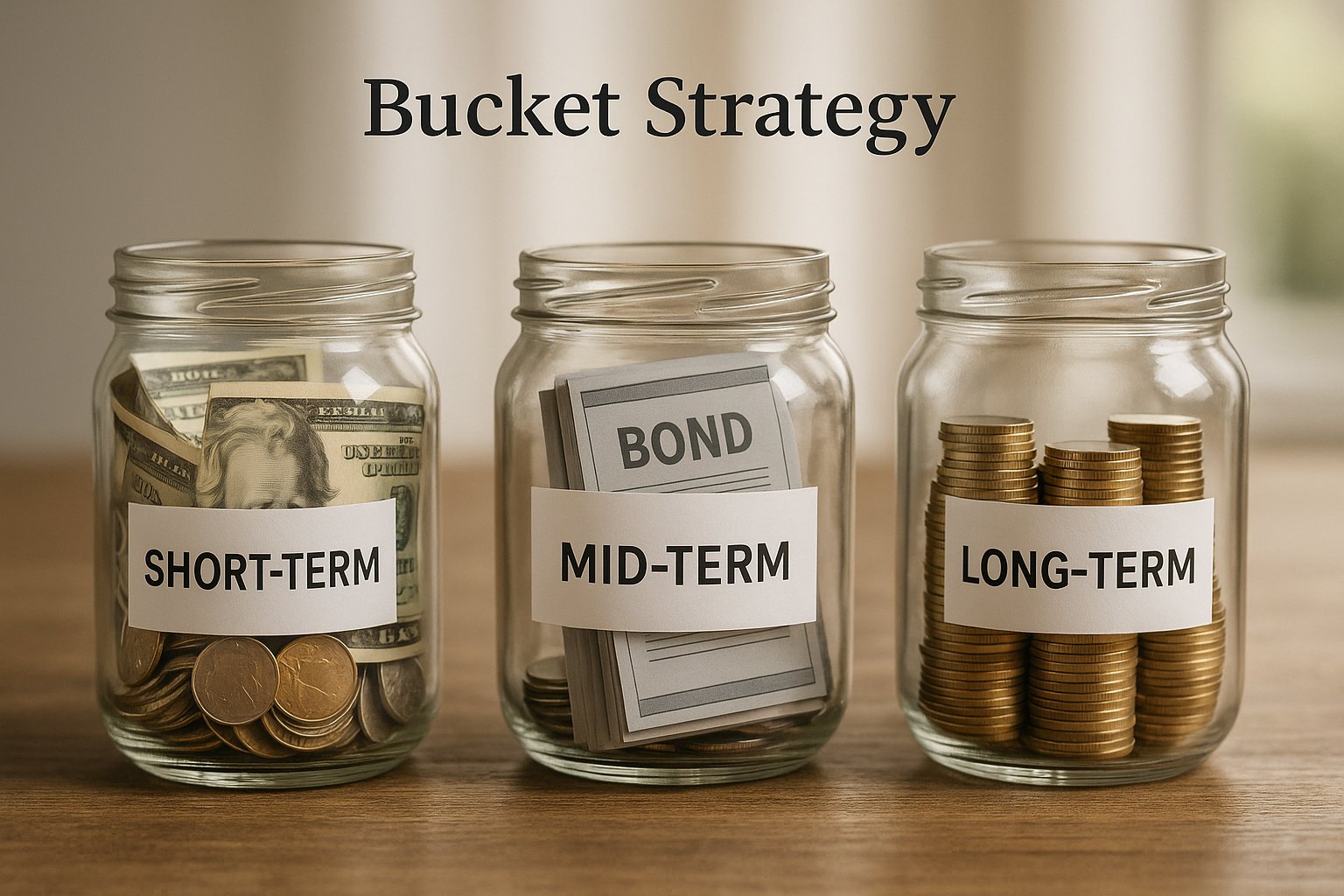
**Bucket Strategy **Dividing assets into short-term (cash), medium-term (bonds), and long-term (stocks) “buckets.” - Pros: Helps manage risk while maintaining growth potential. - Cons: Requires active management and rebalancing.
**Annuities **Converting a portion of savings into a guaranteed income stream. - Pros: Provides lifetime income. - Cons: Less liquidity, may involve higher fees.
Tax-Efficient Withdrawals
Taxes can significantly reduce retirement income if not managed carefully. A smart strategy considers which accounts to withdraw from first.
Traditional IRAs / 401(k)s: Taxed as ordinary income.
Roth IRAs: Withdrawals are tax-free (if requirements are met).
Taxable Accounts: May qualify for lower capital gains rates.
Tip: Many retirees benefit from withdrawing from taxable accounts first, then tax-deferred accounts, leaving Roth accounts for last. But the right order depends on your individual tax bracket and goals.
Building a Personalized Plan
There’s no “one-size-fits-all” approach. Your ideal strategy depends on your savings mix, spending needs, life expectancy, and legacy goals. Working with a financial advisor can help you balance income needs, growth potential, and tax efficiency.

Disclosures: Investment advice offered through Stratos Wealth Partners, Ltd., a registered investment advisor. Stratos Wealth Partners, Ltd. and Parkview Partners Capital Management are separate entities. Neither Stratos nor Parkview Partners Capital Management provides legal or tax advice. Please consult legal or tax professionals for specific information regarding your individual situation.


Mình hay xem soi cầu XSMB với soi cầu MB mỗi ngày để kịp cập nhật trước giờ quay số, coi như thêm góc nhìn cho yên tâm. Ngoài việc đọc dự đoán XSMB, mình còn để ý thống kê lô gan và lô xiên để nhìn ra nhịp xuất hiện của vài bộ số quen. Thỉnh thoảng anh em trong nhóm cũng nhắc tới mấy công cụ như quay thử XSMB, Rồng Bạch Kim và dữ liệu lịch sử, vì dựa vào tần suất thực tế nên dễ soi lại cho rõ hơn. Mình cũng có ghé soicauxsmb.pro ở giữa quá trình tham khảo, chủ yếu để đối chiếu thêm chứ không kỳ vọng gì quá. Nói chung dự…
Mình mua vé số chủ yếu cho vui, coi như thêm chút hồi hộp sau giờ làm; trúng thì mừng, còn không trúng cũng chẳng ảnh hưởng gì. Đợt trước nghe bạn bè bàn chuyện “cầu kèo” các kiểu nên mình cũng thử tìm hiểu, mà mới đầu thấy loạn hết cả lên. Theo dõi một thời gian, mình bắt đầu ghi lại vài nhận định mình đọc được, rồi so với kết quả để xem có phải mình đang tự hợp lý hóa không. Thỉnh thoảng mình ghé soicauxsmb.io để có thêm đề tài tám chuyện, nhưng luôn tự nhắc là chỉ tham khảo thôi. Có hôm trúng nhẹ thì vui, có hôm sai hoàn toàn thì coi như…