

Understanding How Investment Returns Are Calculated
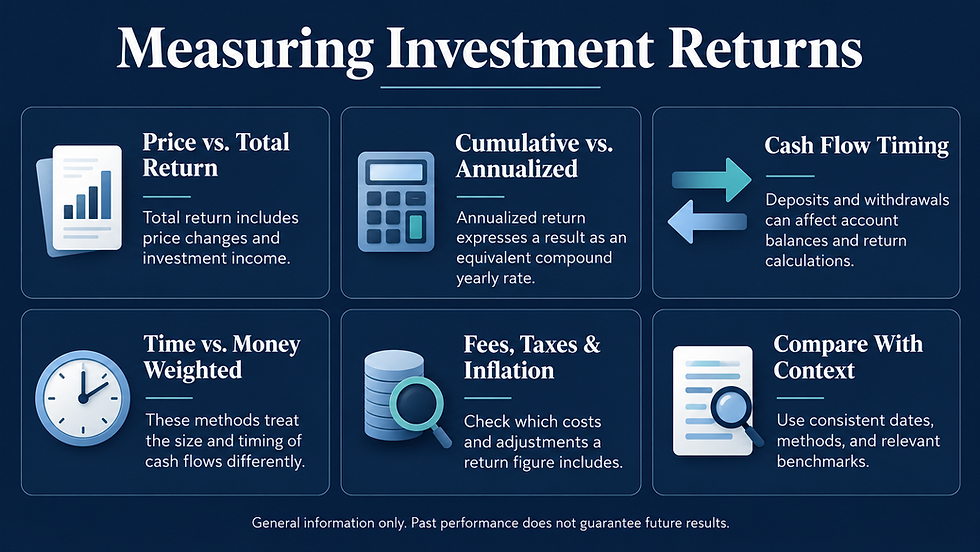
Two reports can show different returns for the same investment account without either number necessarily being incorrect. The reports may use different dates, include different cash flows, or measure different aspects of the investment experience.
Understanding a return begins with understanding the calculation. A change in account value, for example, can reflect deposits and withdrawals as well as investment results. Looking only at the starting and ending balance may therefore produce an incomplete picture.
Return figures are most useful when their purpose, time period, costs, and assumptions are clear. A single percentage cannot explain every aspect of an account or establish what will happen next.
Separating Account Growth From Investment Return
An account balance increases when money is contributed, even if the investments have not gained value. Similarly, a withdrawal can reduce the balance without indicating an investment loss.
This distinction matters when comparing statements. A report describing the dollar change in an account may answer a different question from a calculation designed to measure investment return.
A complete analysis identifies external deposits and withdrawals separately from investment-related changes. The classification of transactions needs to be consistent, especially when assets move between accounts included in a report.
Understanding Price Return and Total Return
A price return considers a change in an investment's price. Total return also accounts for income associated with the investment during the period, using the calculation's stated treatment of distributions and reinvestment.
For a simple holding with no external cash flows, a holding-period calculation relates the ending value and relevant income to the initial value. Additional purchases, sales, or withdrawals can make that simple approach insufficient for an entire account.
A distribution should not be counted twice. If a reported ending value already reflects reinvested income, adding the same income again can overstate the result. The calculation needs to follow the actual transaction records.
Distinguishing Cumulative and Annualized Figures
A cumulative return describes the change over the stated period. An annualized return expresses a multi-period result as an equivalent compound rate per year. It does not mean the investment earned that same rate in each calendar year.
Annualization can make time periods easier to compare, but it also requires care. A short observation period does not establish a sustainable annual result. The dates, number of periods, and method remain material to the interpretation.
A simple average of periodic returns is also different from compound growth. Gains and losses interact over time, so averaging percentages without considering compounding can produce a misleading impression of the experience.
Understanding the Effect of Cash Flows
Time-weighted and money-weighted returns address cash flows differently. A time-weighted approach links results across subperiods to reduce the effect of external contributions and withdrawals on the measured return.
A money-weighted approach incorporates the size and timing of those cash flows. It can therefore describe the experience of capital invested at different points in time. The result may differ from a time-weighted calculation even when both use the same underlying records.
Neither measure answers every question. The relevant choice depends on whether the discussion concerns an investment process, an account's cash-flow experience, or another purpose. Consistent labels make comparisons more meaningful.
Accounting for Costs and Taxes
Gross and net return figures can differ because of fees and expenses. Different reports may deduct different costs, so the word net is not sufficient without an explanation of what has been included.
Tax treatment adds another layer. A pre-tax return does not describe the amount available after an individual's taxes. Account type, realized transactions, distributions, and personal circumstances can affect that result.
Inflation also affects interpretation. A nominal gain and a change in purchasing power are different measures. Evaluating a calculation requires knowing whether it is presented before or after the effects being discussed.
Using Comparisons With Context
A benchmark may help provide context, but its composition and calculation need to be understood. A portfolio with different objectives, exposures, cash needs, or restrictions may not be directly comparable to a broad market measure.
The treatment of income, fees, and dates should also be consistent. Comparing a net account result with a gross reference figure without explanation can obscure differences in the underlying measurement.
Return alone does not describe risk, liquidity, or the experience during the period. Two investments with similar ending results may have followed substantially different paths or involved different constraints. At Parkview Partners Capital Management, we believe choosing a financial planner begins with asking thoughtful questions. Contact our team to learn about our approach and discuss your financial planning needs.
Reading a Return Figure More Clearly
A useful report identifies the period, method, treatment of cash flows, and costs included. It may also explain relevant limitations, such as estimated valuations or incomplete historical records.
Those details help connect the number with the question it is intended to answer. They do not turn historical results into a forecast. Past results cannot establish future outcomes, and a measurement method does not remove investment risk.
Understanding the calculation provides a basis for clearer discussion. The objective is to interpret results consistently and in context rather than treating an isolated percentage as a complete assessment of an investment relationship.
This material is for general informational purposes only and is not intended to provide, and should not be relied on for, financial advice. Please consult a qualified financial professional for advice tailored to your individual circumstances.



Comments